
What to Bring When Moving a Loved One Into Memory Care
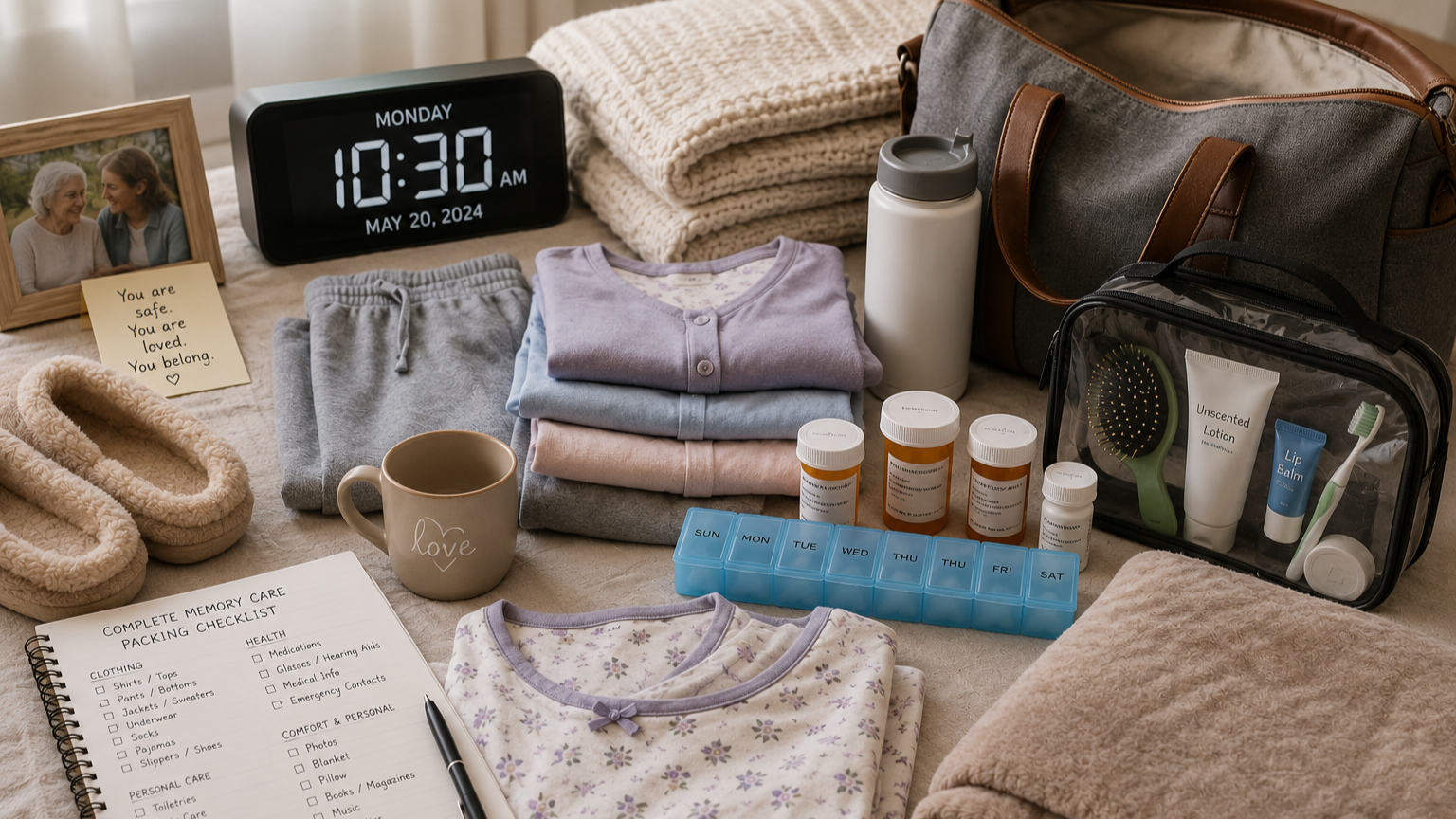
Once we decided on a memory care facility for my dad and the paperwork was signed, our next step was to tackle the move-in list the facility had given us. At first glance, the list seemed simple enough. Bring clothes. Bring bedding. Bring toiletries. Bring family photos. But the more we looked at it, the more questions we had.
The facility provided a twin bed, but was that really the best option for someone who had slept in a king bed for decades? What type of mattress is best for an aging adult who may eventually have mobility issues? Would an adjustable base actually help? What kind of clock works best for someone with dementia? Which items would make his room feel familiar and comforting, and which would simply create clutter?
We asked staff members for recommendations, but most of the answers were understandably general. Every resident is different, and there isn't one right answer for everyone. So we started researching.
Some of the items below were things we purchased specifically for memory care. Others were things we already owned that quickly became some of the most important comforts in my dad's room.
If you're getting ready to move a loved one into memory care, these are the items we found most helpful.
What We Brought
A Full-Size Bed Instead of a Twin and an Adjustable Frame
A Waterproof Mattress Protector
A Large Dementia Clock
Photos and a Digital Frame
A Small Smart Speaker
Comfortable Non-Slip Shoes
A Favorite Blanket
A Recliner
1. A Full-Size Bed Instead of a Twin
The facility offered a twin bed, but my dad had spent decades sleeping in a king. A twin felt too small.
Taking into account the reality that a large portion of his life may be spent in this bed, including his most vulnerable final months, we wanted to make sure we got something that would be as comfortable as it was practical. After spending far more time researching mattresses than I ever expected, we ultimately purchased a full-size hybrid mattress and a separate adjustable base.
Comfort was our primary goal. Dad is likely going to spend more and more time resting as his disease progresses, and we wanted him to be comfortable. The adjustable base was an added expense, but one we felt was worth it. Not only does it make reading, watching television, and resting more comfortable today, but it may also be helpful as his mobility changes in the future.
Our Recommendation: [Link to Mattress Article]
2. A Waterproof Mattress Protector
This was one of the least exciting purchases and one of the smartest.
Even if your loved one has never experienced incontinence, dementia can change routines quickly. Protecting the mattress from spills and accidents can save a lot of hassle down the road.
We chose a waterproof protector that doesn't feel plastic or noisy, because comfort still matters.
Our Recommendation: [Affiliate Link]
3. Photos and a Digital Frame
If I could only bring one thing, it would be photos.
As soon as we hung photos on the wall and arranged a few framed pictures around Dad's room, the space immediately felt more personal. More importantly, when he first saw the room, those familiar faces helped signal that this was his space.
We also added a digital frame, which has become one of our favorite additions. Family members can upload new photos from anywhere, making it easy to share birthdays, vacations, school events, and everyday moments. Even when we can't be there in person, it's a simple way to help Dad stay connected to the people he loves.
For families with children or grandchildren, it's especially meaningful because the photos are always changing. Every visit brings something new to look at and talk about.
Our Recommendation: [Aura Frame Link]
4. A Large Dementia Clock
When our dad was still living at home, he would often wake up during the middle of the night and think it was some other time of day. Thankfully my mom would be there to tell him to go back to bed. But we worried that once he was living in memory care he wouldn’t have that help and he would be disoriented. When buying a clock for his room, we figured it would be helpful to find one that displayed not only the time, but also the day, date, and time of day.
Anything that helps with orientation can be helpful.
While no clock can eliminate confusion, providing simple visual reminders throughout the day seemed like an easy addition to Dad's room.
Our Recommendation: [Dementia Clock]
5. A Small Smart Speaker
Music has always had a powerful effect on my dad.
For many people living with dementia, favorite songs from earlier decades can be calming, comforting, and sometimes even spark memories and conversation.
We chose a small smart speaker that allows us to create playlists specifically for him. Now anyone can simply say, "Alexa, play Tom's Playlist," and his favorite music starts playing.
It's a simple thing, but it brings him a lot of joy.
Our Recommendation: [Amazon Echo Dot]
6. Slip-On Shoes or Sneakers
Memory care residents spend a surprising amount of time walking between their room, meals, activities, and common areas.
Comfort matters, but safety matters even more.
Before moving into memory care, our dad had already started having trouble with getting shoes on and off, so we had a headstart in the footwear department. realized that easy-to-put-on shoes were far more practical than shoes with laces. As dementia progresses, tasks like tying shoes can become difficult or frustrating. A comfortable pair of slip-on shoes or supportive sneakers can help maintain independence while reducing the risk of trips and falls.
Look for shoes with good traction, a secure fit, and enough support for daily walking.
Our Recommendation: [Men’s Slip-in Sneakers] [Women’s Slip-in Sneakers] kizik athens women’s
7. A Favorite Blanket
This might sound simple, but familiar textures matter.
Memory care introduces a tremendous amount of change all at once. Bringing a favorite blanket from home can provide comfort and familiarity in a new environment.
For Dad, it was one more reminder that not everything in his world had changed overnight.
8. A Recliner
If your facility allows it, consider bringing a favorite chair.
Many residents spend more waking hours in a comfortable recliner than they do sitting on their bed.
If your loved one already has a chair they love, bringing it along can help make the transition feel a little easier.
Our Recommendation: [Affiliate Link]
Download Our Memory Care Packing Checklist
A printable checklist of everything we brought, plus a few items we wish we had thought of sooner.
[Download PDF]
Final Thoughts
Looking back, I think we worried too much about bringing enough things.
What mattered most wasn't filling the room. It was making the room feel familiar.
The photos and digital frame.
The favorite blanket.
The music he loves.
The comfortable chair.
Those were the things that helped transform an unfamiliar room into a place that felt more like home.
If you're preparing for a memory care move, don't feel like you need to recreate an entire house. Focus on the items your loved one uses, enjoys, and recognizes every day.
Those are often the things that matter most.
